
Table of Contents
A baby’s stage changes which parts of the home receive the most contact. A child spending much of the day on a play mat creates different cleaning priorities from a toddler carrying toys between rooms and feeding themselves.
Crawling brings floors into closer contact. Toilet training changes the bathroom. Preschool adds shoes, bags and outdoor activity to the household pattern, while the arrival of a younger sibling can shift laundry and floor use again.
That changing use of the home is what makes weekly cleaning for families with young children in Singapore households a stage-based decision rather than a fixed room-by-room routine.
As children become more independent, cleaning does not simply increase everywhere. Attention moves between floors, dining areas, bathrooms, bedrooms and shared spaces. A useful weekly routine should follow those changes rather than giving every room the same priority indefinitely.
Key Takeaways
- Cleaning priorities should shift as children move through crawling, independent eating, toilet training, and preschool.
- Floors, dining areas, bathrooms, and shared surfaces often become more important at different stages.
- Weekly cleaning supports the household routine, while spills, potty use, and food mess still need prompt cleanup.
- Cleaning-product safety depends on correct use, storage, dilution, and ventilation, not just the label.
- Families should adjust the cleaning scope as children grow instead of simply adding more cleaning time.
Weekly Cleaning Priorities Change as Young Children Grow
Children’s contact with the home changes quickly during the early years.
| Child stage | What changes at home | Weekly cleaning focus |
| Pre-crawling | Limited independent movement | General floors, nursery, bathroom, laundry |
| Crawling and early walking | Much more floor contact | Floors, play areas, low surfaces |
| Toddler | Independent eating and play | Dining area, toys, floors, bathrooms |
| Preschool | More movement inside and outside | Entrances, shared surfaces, bathroom, bedrooms |
A young baby may spend long periods close to the floor while touching relatively few household surfaces independently. Crawling increases contact between floors, hands, toys and other objects.
Toddlers touch more surfaces and spread food mess further as independent eating develops. Toilet training adds lower bathroom surfaces to the routine. Preschool children then move between home, childcare, playgrounds and other environments more independently.
The workload shifts between different parts of the home rather than simply becoming heavier everywhere.
Floors Matter More Once a Baby Starts Crawling
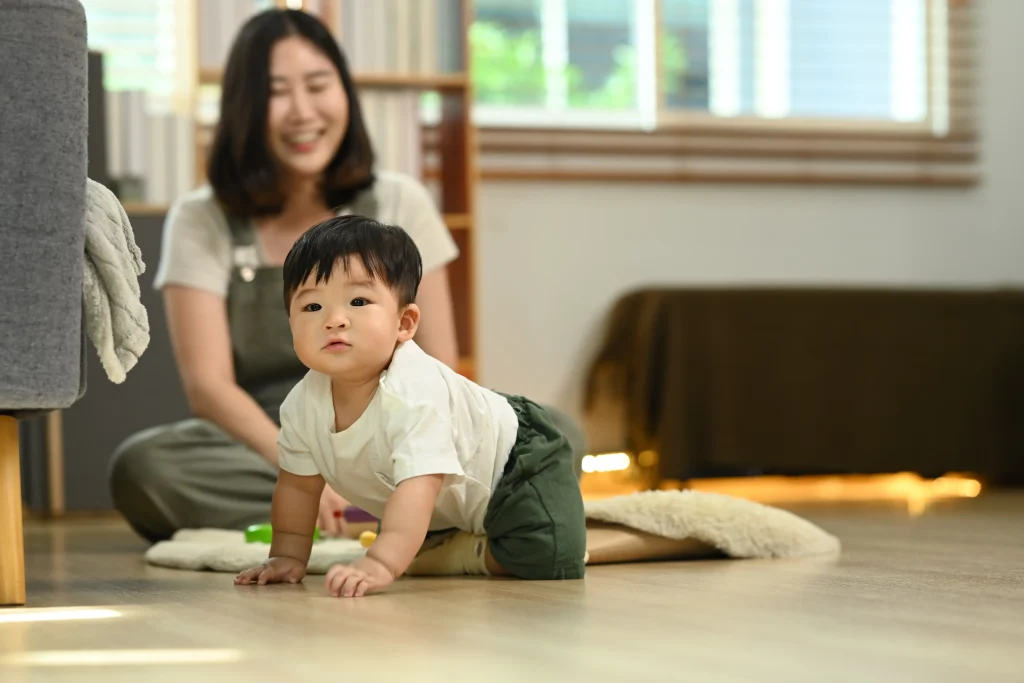
Crawling changes the role of the floor. It becomes part of the child’s immediate play environment rather than simply a surface people walk across.
Crumbs, hair, dust, dirt carried in on footwear and debris below furniture become more relevant. A floor can appear clean from standing height while still collecting dirt beside skirting boards, around play mats and beneath accessible furniture edges.
Floor care therefore becomes one of the clearest priorities within weekly cleaning for families with young children Singapore once crawling starts.
The National Environment Agency’s guidance on cleaning residences includes floors among household areas that may require cleaning and disinfection. Disinfectants should be prepared and used according to the manufacturer’s instructions.
Regular physical cleaning should remain the focus rather than assuming every floor needs constant disinfection.
Food Mess Moves Beyond the High Chair
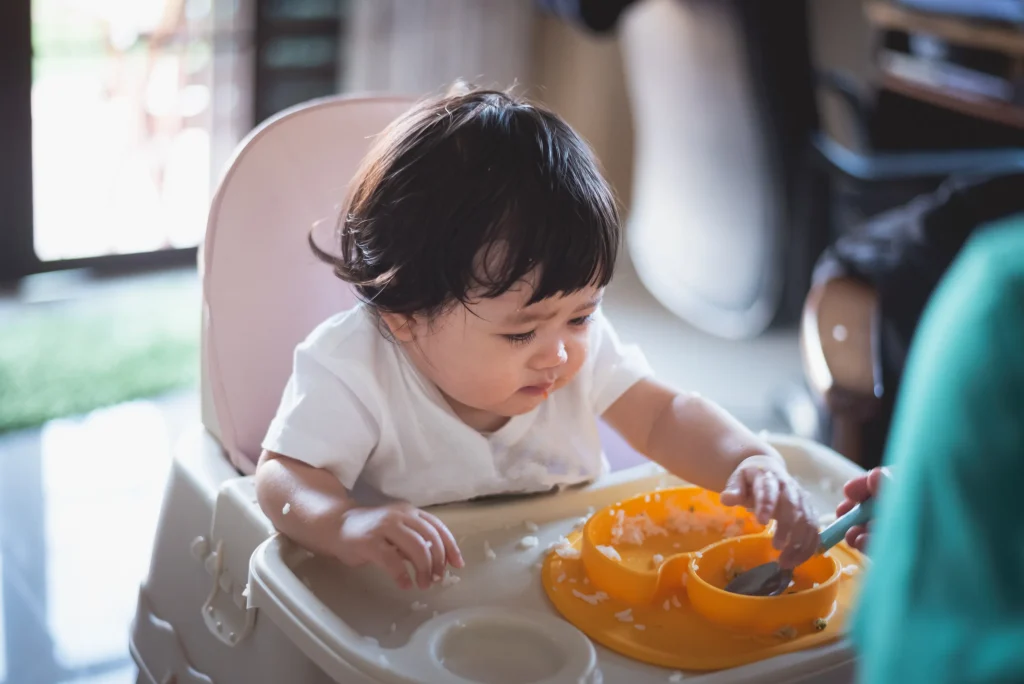
Independent eating expands the area affected by a meal.
Food may reach:
- The dining table
- High chair or dining chair
- Chair legs
- Nearby floors
- Cabinet surfaces
- Anything touched before hands are cleaned
Obvious spills still need immediate attention. Weekly cleaning deals more with residue and buildup that quick daily wiping can miss.
A dining area used for three meals a day may therefore deserve more weekly attention than a bedroom of similar size that sees little activity. Actual household use provides a better guide than floor area alone.
Toys, Play Mats and High-Touch Surfaces Need Different Cleaning
Everything a child touches does not require the same cleaning method.
Hard plastic toys, washable soft items, play mats, books, electronic toys and larger play equipment all respond differently to cleaning. A toy frequently placed in a younger child’s mouth deserves different attention from one sitting untouched on a shelf.
Singapore’s childcare-sector infection-control guidance distinguishes between washable, non-immersible and difficult-to-clean toys, reinforcing the broader principle that material and use affect the appropriate cleaning method. Those guidelines apply to care settings rather than private homes.
A play mat used daily may therefore need more regular attention than decorative nursery furniture.
Toilet Training Changes Bathroom Cleaning
Toilet training introduces more child-contact surfaces at a lower height.
These may include:
- Potty or toilet insert
- Toilet seat and flush area
- Step stool
- Sink edges and taps
- Lower cabinet handles
- Nearby flooring
HealthHub advises keeping a potty in the toilet rather than living or sleeping areas and washing and disinfecting it after each use.
That immediate cleanup belongs to the daily household routine. A weekly cleaner can instead address the wider bathroom surfaces and buildup surrounding that routine.
Child-Safe Cleaning Is More Than Choosing a ‘Natural’ Product
Labels such as ‘natural’, ‘green’ or ‘eco-friendly’ do not automatically tell you whether a cleaning product is appropriate around children.
Safe use also depends on how a product is stored, diluted where required, applied, removed from surfaces and used with appropriate ventilation.
NEA’s updated disinfectant guidance advises users to follow product instructions, keep disinfectants away from children, avoid mixing products and use them in ventilated areas.
Parents therefore need to know both what product is being used and how it is being handled. Reassuring wording on the bottle should not replace the manufacturer’s directions.
Weekly Cleaning Tasks That Matter Most in Homes With Young Children
By this stage, weekly cleaning for families with young children often centres first on the areas receiving the most regular contact.
- Floors and dust usually become more prominent once children play close to the ground. Vacuuming, mopping and accessible dusting can include spaces around tables, play areas and reachable furniture without assuming every hidden corner receives detailed attention during every visit.
- Kitchens and bathrooms follow household use. Kitchen cleaning connects to food preparation and children’s eating areas, while bathroom cleaning becomes more significant during toilet training.
- Laundry, ironing and bed linen can also form a large part of household work. Young children may generate frequent clothing and linen changes, although what a cleaner handles depends on the agreed service scope.
- Windows and household waste may belong in the recurring workload when needed, but higher-use floors, dining areas and bathrooms may reasonably take priority during a limited session.
Weekly Cleaning Does Not Replace Daily Cleanup With Young Children
Weekly household cleaning has clear limits.
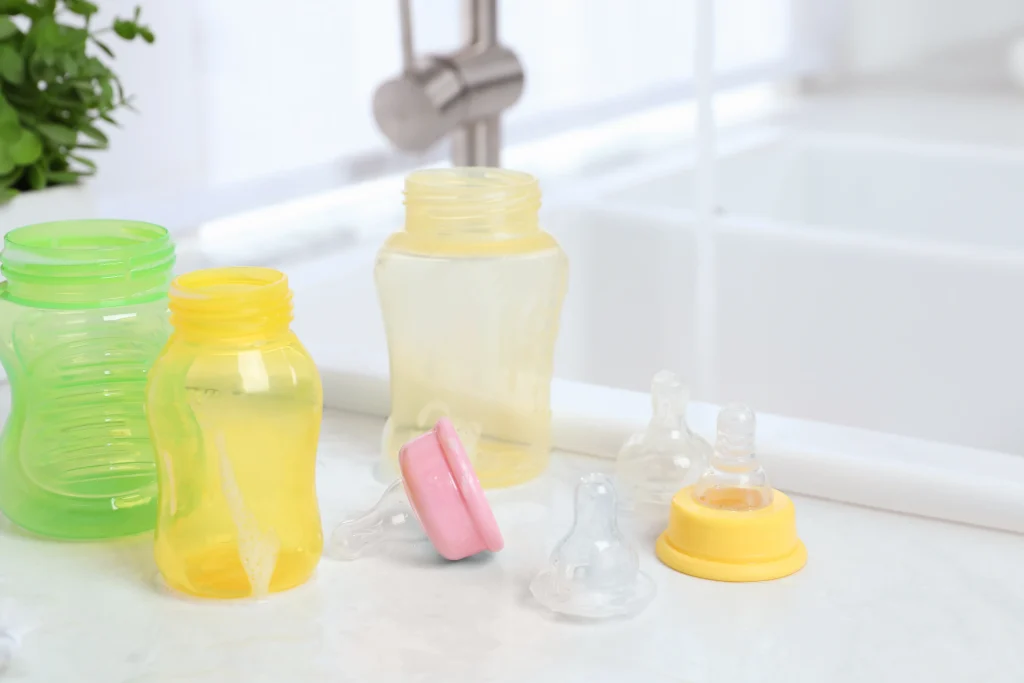
Food spills should be handled when they happen. A used potty needs cleaning after use. Bottles, utensils and other food-contact items follow their normal daily hygiene routine. Heavily soiled toys may also need attention before the next scheduled session.
Vomiting, urine, faeces and other bodily-fluid incidents should not be left until the weekly cleaner arrives. NEA guidance calls for more rigorous cleaning and disinfection where bodily-fluid spills or discharges are involved.
Recurring cleaning supports household maintenance. Immediate mess still needs immediate attention.
Sick Weeks Need a Different Cleaning Routine
A week involving vomiting, diarrhoea, fever or another contagious illness can temporarily change household cleaning priorities.
Bathrooms, bedding, frequently touched surfaces and areas affected by bodily fluids may need additional attention. Disinfectants should not simply be sprayed everywhere.
NEA advises following manufacturer directions, allowing the required contact time and maintaining adequate ventilation during cleaning and disinfection. Specific illnesses can also require different environmental-cleaning measures.
Once the household returns to its normal routine, the usual weekly priorities can be reviewed again.
One Child and Two Young Children Create Different Cleaning Loads
Bedroom count alone gives a weak picture of household cleaning demand.
Consider two hypothetical Singapore homes.
A two-bedroom condo with one infant may have most activity concentrated around the nursery, living room and feeding area. A similar-sized condo with a toddler and preschooler may see more meals, bathroom use, laundry, toys and movement between rooms.
A larger HDB home with one young child, little home cooking and several lightly used rooms may have fewer heavily used cleaning areas despite its greater floor area.
Service requirements are better judged by how the household uses the property than by square footage alone.
Weekly Cleaning Priorities After Childcare and Preschool Start
Starting childcare or preschool changes how a child moves between outside environments and the home.
Shoes, childcare bags, water bottles, outdoor play and playground visits can increase use of entrances, floors, bathrooms and shared surfaces.
HealthHub recommends handwashing after outdoor play and after touching common surfaces such as lift buttons and door handles.
That does not make childcare attendance inherently dirty. It simply changes the child’s pattern of contact with public and household spaces, which may shift where weekly cleaning attention goes.
When Weekly Cleaning Needs to Change
Several developmental or household changes justify reviewing an existing cleaning routine:
- A baby begins crawling
- A toddler starts toilet training
- A second child arrives
- An older child starts preschool
- More meals are cooked at home
- A bedroom becomes shared
- A child becomes more independent with eating or bathroom use
The answer is not automatically more cleaning hours. The same appointment may still work with different priorities. The more useful adjustment may be changing the cleaning priorities rather than extending the appointment.
A spare room may need less attention while the dining area needs more. Bathroom cleaning may become more useful than ironing. Floors may move higher in the priority order during the crawling stage.
Families considering weekly cleaning services in Singapore can therefore review the cleaning emphasis before changing the duration of each visit.
Why a Part-Time Cleaner Can Still Make Sense for Families
A recurring cleaner can take responsibility for predictable household cleaning that does not require a parent’s personal judgement every time.
That may include agreed routine work around:
- Floors
- Bathrooms
- Kitchen surfaces
- Dusting
- Laundry-related tasks within the booked scope
Parents still handle the things that cannot wait, including meals, fresh spills, children’s belongings and immediate hygiene needs.
Comfy Homes provides home cleaning services in Singapore. When discussing a recurring arrangement, families can focus on the areas used most heavily and the stage their children are currently in rather than treating every room as an equal weekly priority.
Weekly Cleaning Works Best When Priorities Change With the Family
Cleaning needs change as young children become more independent. Crawling gives floors a different role. Independent eating expands the dining-area workload. Toilet training changes bathroom use, while childcare and preschool change how children move between outside spaces and the home.
A weekly routine should follow those stages rather than stay fixed around the original task list. For weekly cleaning for families with young children, that means reviewing the routine as children’s needs and household usage change.
When discussing a recurring arrangement with Comfy Homes, consider your children’s ages, your home type, and the areas currently receiving the most use. Those details provide a more useful starting point than treating every young family as having the same cleaning needs.
Frequently Asked Questions
How often should a house with young children be cleaned?
There is no single frequency based only on having children. Child age, floor contact, cooking, bathroom use, pets and the home’s usual upkeep all influence how quickly cleaning work returns.
Should floors be cleaned more often when a baby starts crawling?
Crawling increases the amount of direct contact a baby has with the floor, so regular floor cleaning may become a higher priority. That does not mean the whole floor needs constant disinfection.
Are child-safe or natural cleaning products always safer?
Not automatically. Product instructions, storage, dilution, ventilation and keeping cleaning products away from children are also part of safe use.
What should a weekly cleaner focus on in a home with toddlers?
Frequently used floors, eating areas, bathrooms and shared surfaces are sensible places to assess first. The final priority should reflect how the particular household uses those spaces.
Does weekly cleaning replace cleaning up after children every day?
No. Food spills, potty cleanup, bodily-fluid incidents and other immediate mess still need prompt attention, while weekly cleaning handles the broader recurring household workload.