

Table of Contents
Daily household work and weekend cleaning are different kinds of work. Dishes get cleared after dinner, toys are picked up, uniforms go into the wash, and spills are handled as they happen. Meanwhile, bathrooms, floor cleaning, kitchen buildup, dusting and ironing can keep moving towards Saturday or Sunday.
The value of recurring house cleaning for working parents in Singapore households lies in how much of that substantial work disappears from evenings and weekends. A weekly visit alone does not guarantee that result.
Some jobs will remain. Meals still need handling, children’s belongings move around the home, laundry requires decisions, and unexpected mess cannot be scheduled. The useful question is which predictable cleaning jobs can realistically be removed from the family week.
Key Takeaways
- Recurring cleaning is most useful when it removes substantial chores that would otherwise take over evenings or weekends.
- The right cleaning frequency depends on how quickly bathrooms, floors, kitchens, and other tasks build up again.
- Childcare schedules, cooking habits, laundry, and work-from-home routines can all change what needs regular attention.
- The best tasks to outsource are predictable, time-consuming, and do not require constant household decisions.
- Cleaning schedules should be reviewed as children grow, work arrangements change, and family routines evolve.
Where Weekend Housework Actually Comes From
Small weekday chores often contain the mess without completing the deeper cleaning.
A kitchen counter may be wiped after dinner, while grease keeps building around the hob. Toys may go back into baskets, while floors still need vacuuming and mopping. Clothes get washed because they are needed, while folding or ironing moves to Sunday.
Take an illustrative dual-income family living in a four-room HDB flat. Both parents handle quick household jobs after work, but by Saturday the bathrooms need cleaning, the floors need attention, the kitchen needs more than a surface wipe, and a pile of clothes still needs folding or ironing.
None of those jobs seemed urgent on its own. Added together, they create a substantial weekend workload even when the home never looks obviously dirty.
The National Environment Agency’s residential cleaning guidance also identifies areas such as floors, toilets, shower facilities and frequently touched surfaces as regular household cleaning priorities.
Recurring Cleaning Needs Change as Children Get Older
Children change how different parts of the home are used, so the same cleaning arrangement may not fit every stage.
- Babies and toddlers: floors, feeding areas, laundry, play spaces and common areas may need more attention.
- Preschool years: craft materials, snacks, toys, childcare bags and heavier use of living areas can shift the workload.
- School-age years: uniforms, shoes, study areas, bathrooms, sports gear and enrichment equipment introduce different cleaning pressures.
No stage is automatically harder than another. The type of work simply changes.
In recurring cleaning, floors and common spaces often take more attention in the earlier years, while uniforms, bathrooms, study areas and equipment can become more noticeable as children grow. That is why a cleaning arrangement that worked well two years ago may need a different task mix now.
The Best Cleaning Day Depends on the Family Week
The day of the appointment changes what the cleaning session removes from the household routine.
A Thursday or Friday visit may clear accumulated work before the weekend. Monday can suit a family that spends most of Saturday and Sunday at home. A midweek visit may stop bathrooms, floors and kitchen work from building up by Friday.
School and childcare schedules also affect the choice. A household with preschool pickup and enrichment classes may prefer a different day from one where a grandparent visits regularly or one parent works from home twice a week. Weekend outings can shift the best timing again.
The best cleaning schedule is one that follows how the home is actually used, with visits timed for when the mess starts to build up.
Kitchen Cleaning in Homes That Cook Every Weeknight

Two homes of the same size can create very different kitchen workloads.
In one household, dinner is cooked five or six evenings a week. Dishes may be cleared nightly, while grease around the hob, cabinet surfaces, sink buildup, appliance exteriors and floor edges gradually need more attention.
Another household may eat outside or order food several nights each week. Its kitchen may require a much smaller share of the recurring session, even if the property has the same number of rooms.
Cooking behaviour is therefore a better indicator of kitchen cleaning intensity than property size alone.
Laundry Is Often the Work a Cleaner Cannot Fully Remove
Laundry is several separate jobs:
- Washing and drying
- Folding
- Ironing
- Sorting children’s clothes
- Preparing school uniforms
- Changing bed linen
- Returning clothes to cupboards
Outsourcing one part does not remove the whole process.
Paying for ironing may make little difference to Sunday evening if parents still spend a long time sorting clothes and preparing uniforms. Another family may already manage clothing efficiently but lose weekend time changing linen and cleaning bedrooms.
The useful question is which part of the laundry process is actually creating the workload.
Robot Vacuums and Recurring Cleaning Do Different Jobs
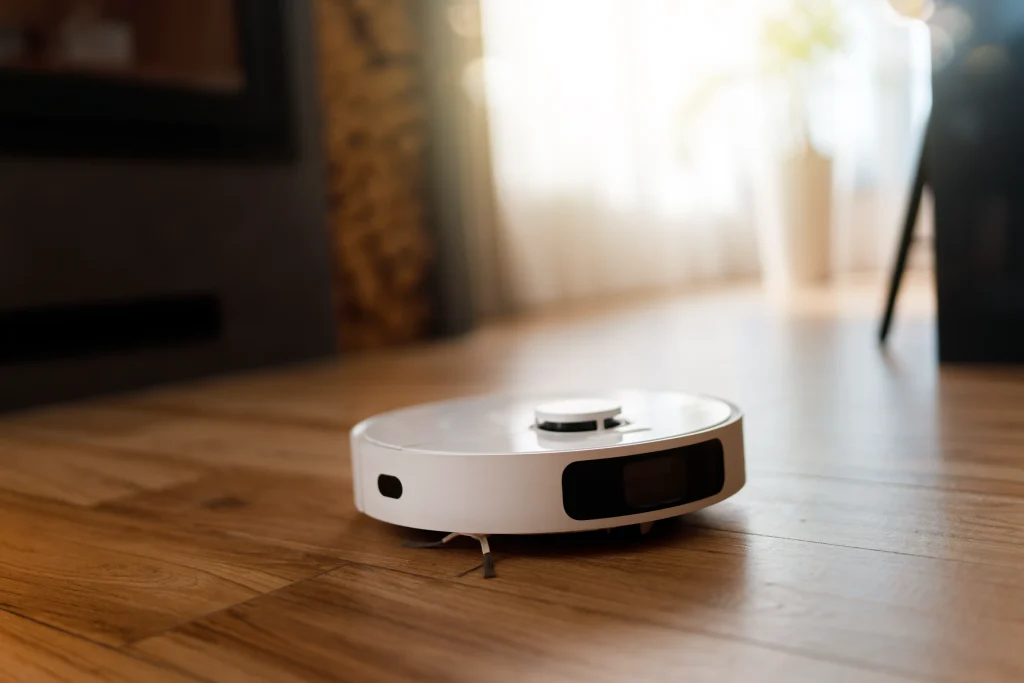
Robot vacuums can reduce everyday floor dust and crumbs, especially in clear and accessible areas.
They do not replace bathroom scrubbing, kitchen grease removal, detailed dusting, bed linen changes, ironing or cleaning around cluttered spaces.
For some households, frequent automated floor cleaning means paid cleaning time can be redirected towards bathrooms, kitchens or other manual jobs. In homes with cluttered floors or awkward layouts, automation may make less difference.
The two approaches can therefore complement each other without performing the same role.
Childcare Routines Change Which Cleaning Tasks Are Worth Outsourcing
The value of recurring cleaning changes depending on how weekday family time is structured.
A household with a child in infant care may have a different evening from one using childcare or preschool. Families with children in primary school face different routines again, while some households rely partly on grandparents for care.
Pickup times, dinner preparation, bath time, homework, enrichment classes and bedtime all occupy fairly fixed parts of the day.
If evenings are already filled with pickup, dinner and bedtime, outsourcing bathrooms or floor cleaning may remove more pressure than outsourcing a low-frequency job that rarely competes with those hours.
The strongest outsourcing candidates are usually the cleaning tasks competing directly with fixed family commitments.
Recurring Cleaning Can Save Labour Without Reducing Mental Load
Physical cleaning and household coordination are separate kinds of work.
A cleaner may handle bathrooms and floors, while parents still:
- Decide what needs attention
- Buy cleaning supplies
- Remember when bed linen needs changing
- Monitor children’s clothes
- Clear clutter before the session
This can explain why a cleaning service looks useful on paper but still does not feel as helpful as expected.
Sometimes the physical work has been reduced while the planning around the household remains unchanged.
Weekly or Fortnightly Cleaning for Working Parents
Frequency should depend on how quickly substantial cleaning returns.
Weekly cleaning may suit households with regular cooking, several bathrooms, younger children, pets, heavy floor use, frequent laundry or weekends spent mainly at home.
Fortnightly cleaning may still work where children are older, meals are often eaten outside, occupancy is lower, floor automation handles everyday debris, or parents already manage routine upkeep comfortably.
Choosing between weekly and fortnightly recurring house cleaning for working parents in Singapore households therefore depends less on property size and more on how much meaningful cleaning has returned before the next visit.
When Recurring Cleaning Still Leaves Parents Cleaning All Weekend
If weekends still contain several hours of cleaning, the arrangement may need reviewing.
Possible reasons include:
- Sessions are too far apart
- Paid time is being spent on lower-value tasks
- Laundry remains a large family job
- The home occasionally needs deeper work
- Family routines have changed
Another possibility is that much of the weekend workload is actually tidying children’s belongings, organising storage, meal preparation or laundry management rather than cleaning.
More cleaning hours will not automatically remove work that sits outside the cleaner’s scope.
A Four-Week Check on Whether Recurring Cleaning Is Working
For four weeks, notice which substantial cleaning jobs still happen on Saturday and Sunday. There is no need to track every quick wipe or five-minute chore.
Focus on work such as:
- Bathrooms
- Floor cleaning
- Kitchen scrubbing
- Ironing
- Dusting
- Bed linen
Then compare that list with what the recurring cleaner handles.
If bathrooms are still being cleaned every weekend, the scope or frequency may need adjustment. If ironing still dominates Sunday evening, changing the floor-cleaning schedule will not solve the problem.
If very little substantial cleaning remains, the current arrangement may already be doing what it should.
Recurring Cleaning Tasks Worth Keeping Out of the Weekend
A strong recurring-cleaning candidate usually has several characteristics. It happens predictably, takes a meaningful amount of time, does not depend heavily on personal decisions, competes with family time, and can be completed effectively within a normal recurring cleaning session.
Bathrooms, floors, routine kitchen cleaning and dusting often fit those conditions. Ironing may as well when clothing can be prepared without extensive sorting decisions.
Organising children’s belongings is different. Deciding what to keep, discard, store or move depends heavily on family judgement.
The best tasks to outsource are therefore jobs another person can complete properly without repeatedly needing household decisions.
Working From Home Changes the Recurring Cleaning Load
Hybrid work changes how the home is used during weekdays.
Where both parents mainly work outside the home, fewer daytime meals may be prepared and some rooms receive limited use until evening.
If one or both parents work from home several days each week, there may be more kitchen use, bathroom visits, floor traffic and activity around home-office areas. At the same time, small weekday cleaning jobs may become easier to handle.
Singapore’s Ministry of Manpower recognises flexi-place arrangements as a form of flexible work arrangement.
Neither setup automatically creates more or less cleaning. The recurring scope should follow how weekday occupancy affects the home.
Recurring Cleaning as Children and Work Schedules Change
A recurring booking should be reviewed whenever the family’s routine changes significantly.
Useful review points include:
- A parent returning from parental leave
- A child starting childcare or primary school
- Work-from-home arrangements changing
- A second child arriving
- Weekend activities increasing
- Grandparents beginning regular childcare
- The family cooking at home more often
A change does not automatically mean the cleaner needs more hours. The day of the appointment or the mix of tasks may need changing first.
A part time maid service arrangement should then follow the household’s current routine rather than remain unchanged simply because it worked before.
Recurring Cleaning Should Give the Weekend Back
The useful measure of recurring cleaning is not simply how the home looks after a session. For working parents, the better test is what no longer needs to be done during evenings and weekends.
Look at which substantial cleaning jobs keep returning, when they appear, and which ones compete most heavily with family routines. Bathrooms, floors, or kitchen work may deserve more attention, while other tasks may need a different frequency.
As children grow and work schedules change, you should review the cleaning arrangement too. Comfy Homes can help you consider a frequency and scope that better reflects how your household actually uses the week.
Talk to us today.
Frequently Asked Questions
Is once or twice weekly cleaning better for working parents?
It depends on how quickly substantial cleaning returns after each session. Cooking, children, pets, bathrooms, floor use and weekend occupancy can influence frequency more than home size alone.
How many hours of recurring cleaning does a family need?
There is no single duration that suits every household. Home size, bathrooms, cooking, children, pets, ironing and the agreed cleaning scope all affect the amount of work involved.
Which housework should working parents outsource first?
Start with predictable, time-consuming cleaning that does not require constant personal decisions. Floors, bathrooms, routine kitchen work and some ironing can be suitable examples.
Can a robot vacuum replace recurring house cleaning?
A robot vacuum can reduce routine floor dust and crumbs. It does not handle bathrooms, kitchen buildup, detailed dusting, bed linen or many tasks around cluttered areas.
Is recurring cleaning worth it if parents still need to tidy every day?
It can be, because tidying and substantial cleaning are different types of household work. Daily toys, belongings and meal-related mess may remain, while recurring cleaning removes larger jobs that would otherwise build up for the weekend.